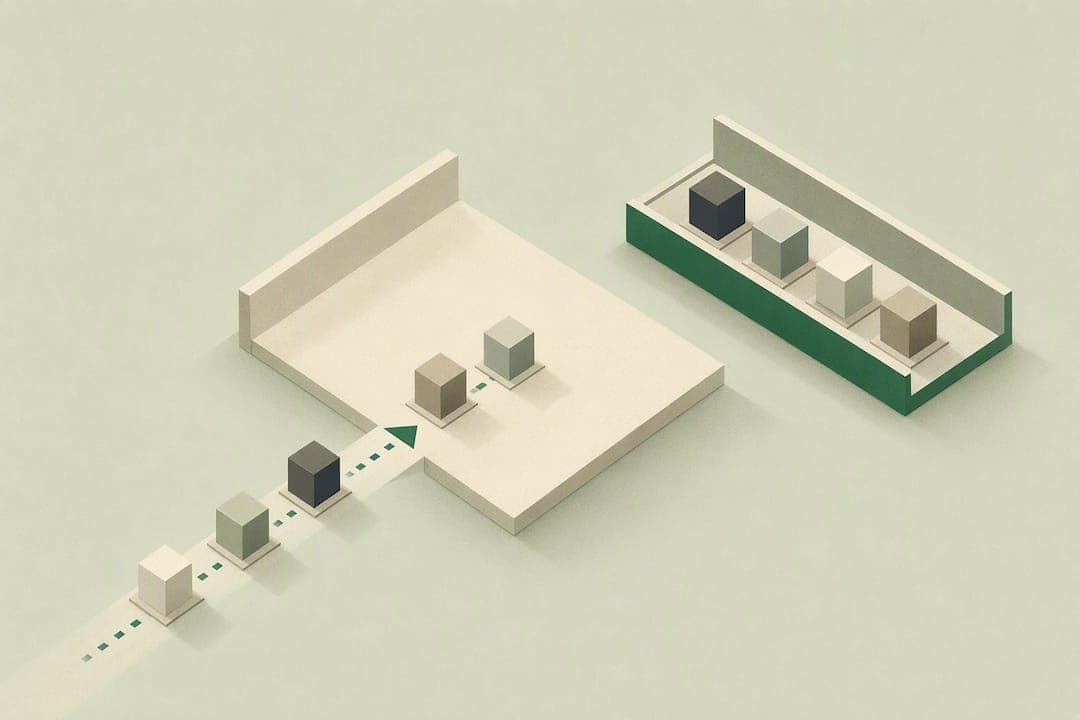
A dynamic purchasing system (DPS) is a fully electronic procurement tool that lets public sector buyers source commonly used goods and services from a list of pre-qualified suppliers who can join at any time. Every contract awarded through it still needs a mini-competition. Direct awards are not permitted. The Procurement Act 2023 has now introduced "dynamic markets" as the updated legal framework for this type of open, ongoing sourcing.
TL;DR:
- A DPS allows suppliers to join at any time, but each contract still requires a mini-competition, with no option for direct award.
- Simple, low-value procurements can typically be completed within 10 days from the start of a mini-competition, while more complex cases take longer.
- Maintaining a searchable evidence library and using automation tools can significantly reduce the time suppliers need to prepare responses for mini-competitions.
- The transition from DPS to the new dynamic market model simplifies ongoing supplier entry and competition procedures under the updated Procurement Act 2023.
- Poorly scoped admission criteria and insufficient resourcing can cause administrative bottlenecks, so regular reviews and clear filters are essential for efficient management.
Table of Contents
- What is a dynamic purchasing system and how is it defined in UK law?
- How does a dynamic purchasing system actually work?
- Is a dynamic purchasing system worth the admin for your team?
- DPS, framework, or dynamic market: which fits your requirement?
- How do you set up and run a DPS step by step?
- How can suppliers respond faster to DPS mini-competitions?
- What procurement officers get wrong about running a DPS
- Prepare stronger DPS bids without the last-minute scramble
- Sources
- FAQ
What is a dynamic purchasing system and how is it defined in UK law?
A dynamic purchasing system is a fully electronic commercial agreement that stays open to new suppliers throughout its lifetime, unlike a closed framework with a fixed supplier list. Buyers use it for commonly used goods and services where demand is ongoing and the supplier market keeps shifting, such as IT contractors, temporary staffing, or facilities maintenance.
Two technical features define a DPS in practice. First, it must operate entirely online, from supplier applications through to contract award. Second, it can be divided into parts or lots, so a buyer running a DPS for construction services might split it by trade, region, or contract value. Regulations governing DPS use also prohibit charging suppliers for taking part, which keeps the entry barrier low for smaller firms.
Not every purchase suits this model. A DPS works well for repeat buying of standard categories where you expect multiple suppliers to compete over several years. It works poorly where you need:
- A single, one-off specialist contract with no ongoing repeat need
- Direct catalogue-style ordering with no competition at all
- A tight, long-term strategic partnership with one or two suppliers
If your requirement is genuinely bespoke or you only ever plan to buy once, a standard tender or a framework agreement usually fits better than a DPS.
How does a dynamic purchasing system actually work?
A DPS runs on two distinct stages, and mixing them up is where most confusion starts. Understanding the sequence matters more than memorising the terminology.
- Continuous supplier admission. Suppliers can apply to join the DPS at any point during its life, provided they meet published admission criteria. There is no closed application window. Buyers assess each applicant against selection criteria and add qualifying suppliers to the relevant part or lot.
- Further competition for every contract. When a buyer has an actual requirement, they cannot simply pick a supplier off the list and award the work. Every contract must go through a mandatory further competition, sometimes called a mini-competition, where qualified suppliers on that part of the DPS bid against each other.
Direct award is not an option under a DPS. That distinction separates it from a straightforward catalogue purchase, and it is one of the most common points procurement teams get wrong when a DPS is set up in a hurry.
Timescales vary with complexity, but simple procurements can be completed in around 10 days from initiation to award, a figure echoed by Scottish Government guidance as a realistic minimum return time for straightforward mini-competitions. More complex requirements, larger contract values, or detailed evaluation criteria will stretch that considerably, so build in buffer time rather than assuming every award will hit the 10-day mark.
Is a dynamic purchasing system worth the admin for your team?
A DPS gives buyers genuine speed and reach that a closed framework cannot match. Because the supplier list stays open, new entrants and fresh innovation can join without waiting for a full re-procurement, which the Crown Commercial Service highlights as a particular strength in fast-moving markets like IT and temporary staffing. Open admission with proportionate criteria also lowers the barrier for SMEs and market entrants who might never clear the qualification bar on a traditional framework.
The trade-off is administrative load. Every single contract still needs its own mini-competition, and that ongoing cycle demands sustained resource from your team, not a one-off setup effort. Left unmanaged, a DPS can also accumulate an unwieldy number of qualified suppliers, making shortlisting slower rather than faster. The practical risks worth planning around:
- Continuous mini-competition administration, even for low-value, routine purchases
- No route to direct award or catalogue-style ordering, however small the contract
- Supplier lists growing too large to filter efficiently without good tooling
Pro Tip: Set admission criteria that are proportionate but specific enough to filter effectively, and revisit your DPS Marketplace filters every few months. A supplier list that has doubled in size since launch needs sharper filtering, not just more scrolling.
DPS, framework, or dynamic market: which fits your requirement?
Choosing the right commercial tool comes down to one question: do you need ongoing openness, or a small group of long-term partners? A framework suits the second case, where you want a defined set of suppliers you can build a working relationship with over several years. A DPS or the newer dynamic market suits the first, where the supplier base is likely to change, grow, or improve over time.

The Procurement Act 2023 has reshaped this decision. It replaces the DPS and qualification systems with dynamic markets, a single updated tool with clearer notice and management requirements. The underlying mechanics, continuous supplier entry and mandatory further competition, stay familiar, but the terminology and some procedural obligations change.
Practical decision points for procurement officers weighing up their options:
- Choose a framework when you have a stable, small supplier pool and want a long-term strategic relationship.
- Choose a DPS or dynamic market when the market is evolving, new suppliers regularly enter it, or you expect to buy the same category repeatedly over several years.
- Check whether your organisation's live agreements need reclassifying under dynamic market rules, since notice requirements at setup, modification, and closure now follow the updated Act.
Get this decision wrong early and you either lock yourself into a closed list that can't flex with the market, or you take on mini-competition admin you didn't need.
How do you set up and run a DPS step by step?
Getting a DPS working well starts before the first supplier application lands. Sequence matters here, because a poorly scoped admission stage creates problems that surface months later during your first mini-competition.
- Define scope and structure. Decide whether the DPS needs parts or lots, and write admission criteria that are clear enough to filter suppliers without excluding capable SMEs.
- Confirm compliance basics. Check the agreement will run fully electronically and that no supplier fees are charged for participation, both mandatory under DPS regulations.
- Publish and open for applications. List the DPS on the relevant marketplace, such as the Crown Commercial Service DPS Marketplace, so suppliers can apply on a continuous basis.
- Shortlist using filters. When a requirement arises, filter qualified suppliers by capability, location, or credentials to build your mini-competition shortlist.
- Run the further competition. Issue evaluation criteria, collect responses, and award the call-off contract to the winning bid.
- Keep records current. Maintain supplier lists and publish the required dynamic market notices at each lifecycle stage.
| Complexity level | Typical minimum timescale | Key admin focus |
|---|---|---|
| Simple, low-value purchase | Around 10 days | Fast shortlist, straightforward evaluation |
| Moderate complexity | Several weeks | Detailed evaluation criteria, more supplier engagement |
| High-value or technical requirement | Several weeks to months | Extended evaluation, higher governance scrutiny |
How can suppliers respond faster to DPS mini-competitions?
Suppliers chasing DPS contracts face a familiar squeeze: tight turnaround windows, scattered past evidence, and accreditation checks that eat into drafting time. Winning a mini-competition often comes down to how quickly a team can pull together proof of past performance rather than how strong their capability actually is.
Capability that shortens this cycle tends to share a few features:
- A searchable evidence library of past bid responses and outcomes, so teams aren't rebuilding case studies from scratch
- Template responses that adapt to each mini-competition's specific evaluation criteria
- Automated accreditation and certification checks against DPS admission requirements
- AI-assisted review that flags weak or generic answers before submission
Bidblock's workspace is built around exactly this kind of evidence reuse, and firms exploring how to strengthen mini-competition responses can see the platform in action.
What procurement officers get wrong about running a DPS
Flexibility is the real selling point of a DPS. When your market is genuinely fluid, new suppliers, changing technology, unpredictable demand, nothing else matches it for keeping your options open without repeated full retenders.
Three red flags come up again and again. Teams launch a DPS without the resourcing to run mini-competitions properly, treating it as a one-off setup job rather than an ongoing commitment. Admission criteria get written too loosely, producing supplier lists so long that shortlisting becomes its own bottleneck. And some teams still try to treat a DPS like a catalogue, attempting something close to a direct award when the rules simply do not allow it.
One habit fixes most of this: review your admission criteria and resourcing plan annually, not just at launch.
— Syed
Prepare stronger DPS bids without the last-minute scramble
Certain platforms give suppliers something a spreadsheet of old tender documents never can: a structured evidence library that turns past bids into reusable, searchable proof for the next mini-competition. Instead of digging through email threads for that case study from eighteen months ago, you pull it up, adapt it to the current evaluation criteria, and move on.
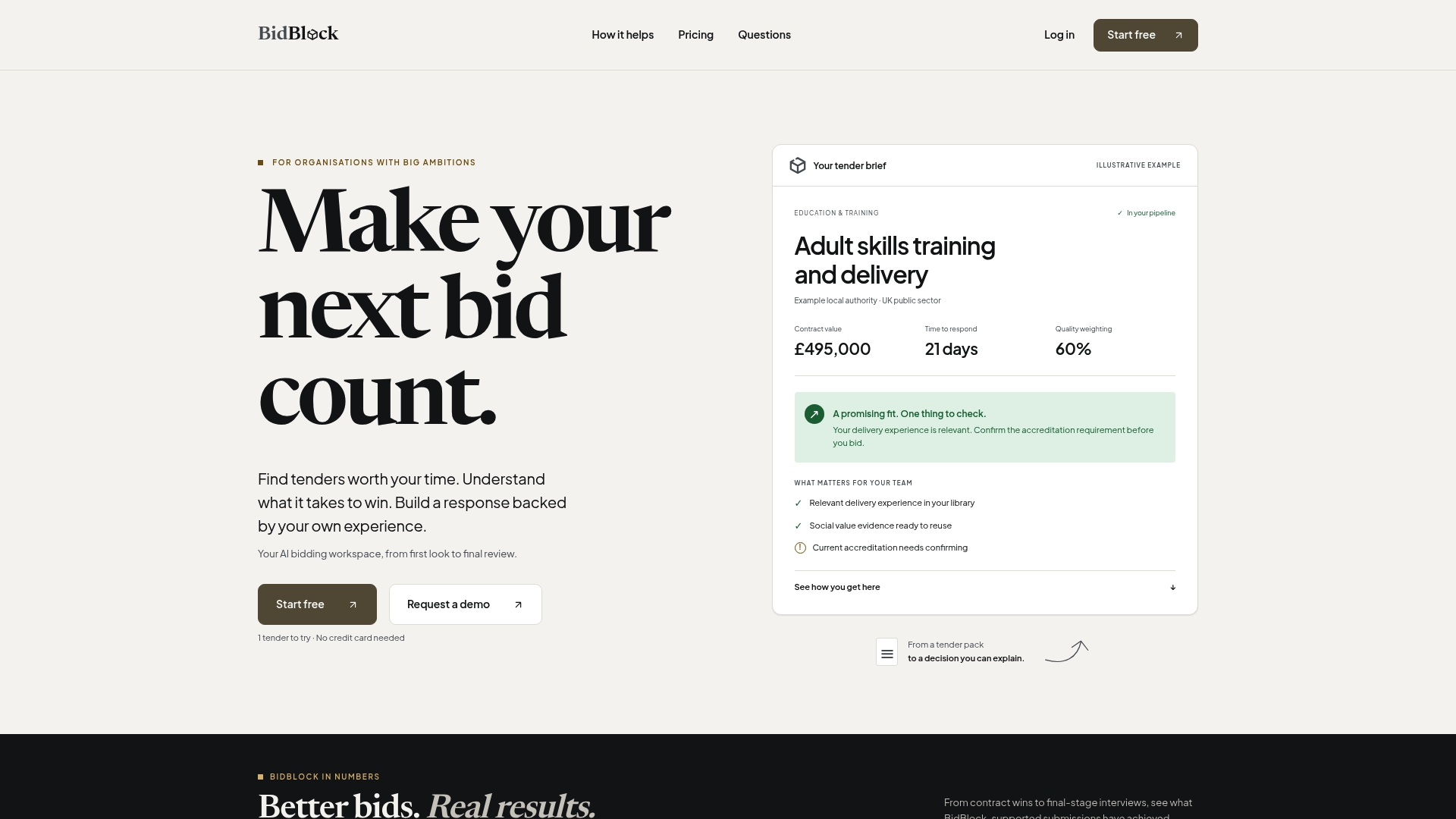
It suits SMEs and first-time bidders who don't have a dedicated bid team, and equally suits busier procurement consultancies juggling several live DPS responses at once. Accreditation checks, AI-assisted review, and social value evidence all sit in one workspace rather than scattered across folders. If your organisation is preparing for its next mini-competition and wants evidence-backed responses ready faster, start exploring Bidblock and see what a structured bid workspace looks like for your team.
Sources
- How to buy through Dynamic Purchasing Systems | GCA (formerly CCS)
- Guidance - Dynamic markets (Procurement Act 2023) — government guidance
- Buy through Dynamic Purchasing Systems | Crown Commercial Service
FAQ
What is a dynamic purchasing system used for?
A DPS is used for buying commonly needed goods and services, such as IT support, staffing, or construction trades, from an open, growing list of pre-qualified suppliers.
Can a buyer award a contract directly under a DPS?
No. Every contract awarded through a DPS must go through a mandatory further competition or mini-competition; direct award is not permitted.
How long does a DPS mini-competition take?
Simple procurements can be completed in around 10 days from start to award, though more complex requirements take longer.
What is the difference between a DPS and a dynamic market?
A dynamic market is the updated tool introduced by the Procurement Act 2023, replacing the DPS and qualification systems while keeping the core model of open supplier entry and further competition.
How can suppliers speed up their DPS bid responses?
Keeping a ready evidence library of past performance and using tools like Bidblock to draft, review, and check accreditation status cuts the time needed for each mini-competition response.