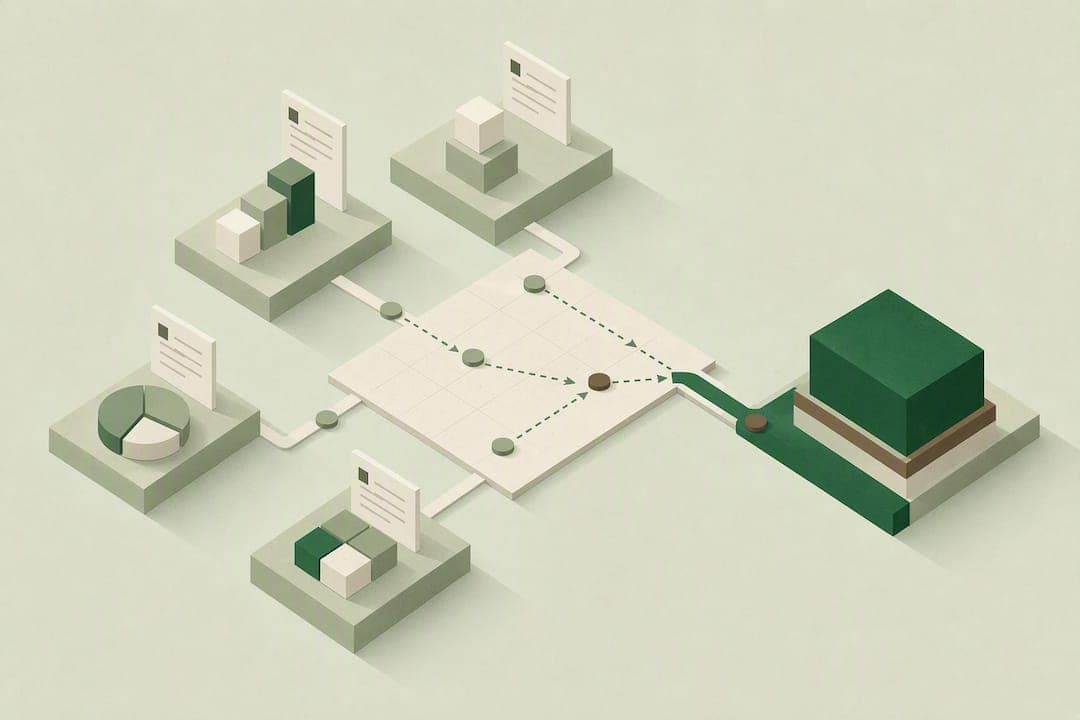
The National TOMs, now the Social Value TOM System, is the UK's minimum reporting standard for measuring and reporting social value in public procurement. Check the buyer's specification for which Themes and Measures apply, then use the TOMs calculator to turn your commitments into evidence-backed, quantified outcomes before you submit a bid.
TL;DR:
- Most buyers do not mandate TOMs but referencing it generally improves the credibility of social value responses due to its sector-wide recognition.
- Effective bids focus on two or three measurable, evidence-backed Measures aligned with genuine organizational capabilities rather than attempting to cover all themes superficially.
- The TOMs calculator attaches standard proxies to Measures, with local multipliers available to reflect regional impact, but attribution must be carefully documented to avoid double counting.
- During contract delivery, evidence must be precise and regularly collected, including invoices, certificates, or logs, with clear responsibilities and reporting cadences set from the start.
- Using BIDBlock or similar tools helps organize evidence, leverage past delivery data, and reduce the risk of over-claiming by grounding commitments in verified, available records.
Table of Contents
- What is national TOMs social value and where did it come from?
- How do the four themes, outcomes and measures work?
- How should you use TOMs in tender responses?
- What is the TOMs calculator and how do proxies and multipliers work?
- What evidence and reporting do buyers expect during the contract?
- How does TOMs relate to the Social Value Model and PPN guidance?
- What are the biggest social washing risks and how do you avoid them?
- What should a bidder and buyer checklist look like?
- Lessons from working with TOMs in live bids
- How BidBlock keeps your TOMs evidence audit-ready
- Where to find the framework, calculator and government guidance
- Sources
- FAQ
What is national TOMs social value and where did it come from?
National TOMs stands for National Themes, Outcomes and Measures. It was built to solve a problem that had plagued public procurement for years: every council and public body was asking suppliers to report social value differently, using different definitions, different formulas, and different proxy values. Comparing one bid's social value claims against another's was close to meaningless.
The National TOMs Framework was developed by the National Social Value Taskforce, working alongside public, private and third-sector organisations, and published as guidance intended to create a shared, minimum reporting standard. The Local Government Association (LGA) has been closely tied to its development and promotion across UK councils and combined authorities.
Two things make this framework unusually easy to adopt. First, it is issued under an open licence, so any buyer or supplier can pick it up and use it without paying a fee for the standard itself. Second, the Social Value Portal built and maintains the operational side, including the calculator most organisations use to turn TOMs commitments into reportable figures. What started as a shared measurement framework has become what the Portal calls the Social Value TOM System, structured around four Themes: Work, Economy, Community and Planet.
Not every buyer mandates it. Some contracting authorities reference TOMs explicitly in their tender documents and expect responses mapped directly against its Measures. Others simply expect a consistent, evidenced approach to social value and leave the choice of framework open, in which case TOMs is usually the safest default because evaluators are more likely to recognise its structure.
What adoption typically looks like in practice:
- The buyer names specific Themes and Measures in the tender pack, sometimes with minimum thresholds.
- The buyer references TOMs generally and asks bidders to propose relevant measures themselves.
- The buyer uses its own bespoke social value model but borrows TOMs proxy values for consistency.
- The buyer requires TOMs reporting only at contract stage, after award, rather than at bid stage.
Knowing which of these four scenarios you're in changes how much freedom you have to select measures and how tightly your evidence plan needs to be built before you submit.
How do the four themes, outcomes and measures work?
TOMs organises everything under four Themes, each theme containing a set of Outcomes, and each outcome measured through one or more specific Measures with an attached financial proxy. This three-tier structure is what makes the framework usable for both bid writing and contract reporting: a bidder commits to a Measure, and that Measure rolls up into an Outcome that a non-specialist evaluator can understand.
The four Themes break down roughly like this:
- Work covers jobs, apprenticeships, skills development and employment routes for disadvantaged groups, such as care leavers or people with long-term unemployment.
- Economy covers spend with SMEs, local suppliers and social enterprises, plus wider supply chain resilience.
- Community covers volunteering, community project funding, and support for local voluntary and community sector organisations.
- Planet covers carbon reduction, waste diversion, biodiversity net gain and other environmental measures tied to contract delivery.
A construction contract might commit to Outcomes such as "increase in local employment" (Work), measured through the number of local apprenticeship starts created during the contract term. A facilities management contract might commit to "reduction in carbon emissions" (Planet), measured through kilograms of waste diverted from landfill. A consultancy framework might focus on "growth in local economy" (Economy), measured through the value of subcontracts placed with SMEs within a defined radius of the contract area.
Each Measure carries a financial proxy, a monetary value assigned to that unit of social benefit, so that a training place, a volunteering hour and a tonne of diverted waste can all be expressed in comparable terms. This is what allows a bid evaluator to add up disparate commitments into a single Social Value £ figure, and it's also where most disputes about credibility arise, which the measurement mechanics section below covers in more detail.
Pro Tip: Don't try to cover all four Themes in every bid. Evaluators tend to reward two or three well-evidenced, deliverable commitments over a scattergun list of ten measures you can't realistically resource.
How should you use TOMs in tender responses?
Buyers set social value weighting in the tender documents, and it varies enormously. Some frameworks give social value a moderate portion of the overall score; others, particularly in local government and housing, allocate a higher weighting. The buyer usually specifies which Themes and Measures apply and sometimes a minimum Social Value £ per £1 of contract spend they expect to see.
For bidders, the process of building a compliant, credible response follows a fairly consistent sequence:
- Read the specification closely before drafting anything. Identify whether TOMs is mandated, referenced loosely, or absent, and note which Themes carry the most evaluation weight.
- Match measures to genuine capability. Choose Outcomes your organisation has actually delivered before, or can resource with confidence, rather than the ones that sound most impressive.
- Check your evidence trail exists before you commit. If you cannot point to a data source, a monitoring process, or a past delivery record for a measure, don't promise it.
- Quantify conservatively. A defensible, modest figure beats an inflated one that collapses under contract-stage scrutiny.
- Write the commitment in measurable language. "We will create 3 apprenticeship starts per year of the contract" is scoreable; "we are committed to nurturing local talent" is not.
- Attach a monitoring and reporting method to every commitment. Evaluators increasingly look for a stated cadence and named responsible role, not just a target.
Evaluators scoring social value responses are generally looking for three things: specificity, deliverability and evidence of past performance. A bid that names exact numbers, ties them to named Measures, and references a track record of delivering similar commitments on comparable contracts tends to outscore one that leans on aspirational language, even when the aspirational bid claims a higher total Social Value £.
Weighting also interacts with contract size in ways bidders sometimes miss. Buyers increasingly cross-reference bid-stage commitments against contract-stage reporting from previous awards, so a pattern of consistent, modest delivery across contracts builds more credibility over time than any single headline figure.
What is the TOMs calculator and how do proxies and multipliers work?
The Social Value TOM System is supported by an operational calculator, maintained through the Social Value Portal, that many procurement teams and suppliers use to convert Measures into quantified Social Value outputs and £ figures. Rather than building your own spreadsheet of proxy values from scratch, the calculator applies the standard proxies attached to each Measure in the National TOMs 2021 Framework, so figures stay consistent with what other bidders and buyers are using across the sector.
Financial proxies are the backbone of the whole system. Each Measure, whether it's a training place, a volunteer hour, or a tonne of carbon avoided, has a default monetary value attached to it, derived from published government data sources and economic research. That's what turns "we ran three community events" into a number an evaluator can score alongside a competitor's very different set of commitments.
Local multipliers adjust that default value to reflect the specific area a contract is delivered in. A job created in a location with high unemployment typically carries a higher Social Value £ value than the same job created somewhere with a tight labour market, because the marginal benefit is genuinely different. The framework allows organisations to replace the default multiplier with a bespoke, project-specific one where they hold robust primary data to justify it, though this needs solid supporting evidence rather than a convenient adjustment to inflate a total.
The TOMs documentation is explicit that avoiding over-claiming depends on clear attribution rules and evidence requirements, including the option to swap default multipliers for project-specific ones only where the underlying data supports it.
Attribution is where most credibility problems start. If your organisation delivers a training programme jointly with a subcontractor and a local college, you cannot each claim 100% of the Social Value £ generated, that's double counting, and it's one of the most common reporting errors the Social Value Portal flags as a validation risk. The practical fix is straightforward, even if it's rarely comfortable:
- Agree attribution percentages with delivery partners before the contract starts, not after a dispute arises.
- Keep a record of who funded, resourced, or directly delivered each element of a shared outcome.
- Never claim the full proxy value for an outcome you only part-funded or part-delivered.
- Flag any bespoke multiplier used and retain the primary data that justifies the deviation from the default.
Getting the mechanics right at this stage saves considerable pain later, because contract-stage monitoring will test exactly these assumptions.
What evidence and reporting do buyers expect during the contract?
Winning the bid is only half the job. Most public sector contracts with social value commitments now require periodic reporting, and the evidence standard expected at that stage is usually higher than what was needed to win the tender in the first place.
Acceptable evidence varies by Measure but tends to fall into a few recognisable categories:
- Employment and training commitments: signed contracts, apprenticeship certificates, payroll extracts, or training provider attendance records.
- SME and local spend commitments: invoices or purchase order data showing supplier postcode and company size classification.
- Volunteering commitments: timesheets, volunteering platform exports, or signed attendance logs from the receiving organisation.
- Environmental commitments: waste transfer notes, carbon calculation methodology, or utility data showing measured reductions.
- Community investment: grant agreements, spend receipts, or beneficiary feedback tied to the funded activity.
Reporting cadence is usually set out in the contract, not the tender, and quarterly reporting is common for contracts running beyond twelve months, with an annual summary rolled up for the contract review. Shorter contracts sometimes only require a single report at completion, but it's worth checking, because assuming a lighter-touch approach and then discovering quarterly reporting was contractually required is an avoidable, embarrassing gap.
Good record-keeping starts well before the first report is due. Build the evidence collection points into your project plan at the same time you agree resourcing, and name a single person responsible for gathering and filing evidence against each committed Measure, rather than leaving it to whoever remembers at reporting deadline.

Pro Tip: Set up your evidence folders and a simple tracker at contract mobilisation, mapped directly to the Measures in your winning bid. Retrofitting an evidence trail three months before an audit is far harder than building it from day one.
How does TOMs relate to the Social Value Model and PPN guidance?
The Social Value Model and the Social Value TOM System solve related but distinct problems, and mixing them up is a common source of confusion for both buyers and bidders.
Central government's Social Value Model, set out in PPN guidance, is largely a qualitative evaluation framework used at tender stage. Evaluators score a bidder's narrative response against defined policy outcomes, such as tackling economic inequality or fighting climate change, rather than converting every claim into a monetary figure. TOMs, by contrast, is a quantitative measurement system, better suited to contract-stage tracking and reporting once commitments need converting into comparable, auditable numbers.
The two are genuinely complementary rather than competing: a central government department might score bids against the qualitative Social Value Model at award stage, then require the winning supplier to report delivery using TOMs Measures throughout the contract term. Local government tenders more often use TOMs at both stages, since councils have driven much of its adoption from the outset.
A few practical points worth holding onto:
- TOMs is not a legal requirement in itself; it's a voluntary standard that buyers choose to reference.
- Where a tender names the Social Value Model explicitly, structure your narrative response around its outcome themes, not TOMs Measures, even if you also plan to report using TOMs post-award.
- Where a tender names TOMs directly, quantify your response using its Measures and proxy values from the outset.
- If the specification is silent on which model applies, ask the buyer via the clarification process rather than guessing, since a mismatched framework is an easy way to lose evaluator confidence before they've read the substance of your response.
What are the biggest social washing risks and how do you avoid them?
Social washing, dressing up vague good intentions as measurable social value, is the single most damaging mistake a bidder can make once contract reporting starts. Common examples include claiming a Social Value £ figure with no attached Measure, promising outcomes with no monitoring mechanism, and rounding proxy calculations upward without documented justification.
A short internal audit before submission catches most of these problems:
- Can every claimed Measure be traced back to a named Outcome and Theme?
- Is attribution clear where a delivery partner or subcontractor is involved?
- Does a sample of your evidence (one from each Measure) actually exist and hold up under scrutiny?
- Would the figure survive a buyer asking "show me the data behind this number"?
The Social Value Portal treats validation as a core design principle of the TOM System precisely because unverified claims undermine confidence in the whole framework, not just the bidder who made them.
Pro Tip: Write every commitment as if the contract manager reading your quarterly report is seeing it for the first time. If a claim needs a paragraph of caveats to make sense, it's probably not verifiable enough to submit.
What should a bidder and buyer checklist look like?
Suppliers preparing a TOMs response, and procurement officers writing the specification that shapes it, both benefit from working through a structured sequence rather than improvising.
For bidders, the practical sequence looks like this:
- Confirm whether the tender mandates TOMs, references it loosely, or leaves the model open, and check for named minimum thresholds.
- Select two to four Measures that match genuine, demonstrable capability rather than aspiration.
- Run each Measure through the TOMs calculator using the correct proxy and, where justified, a bespoke local multiplier.
- Build an evidence plan for each Measure before submitting, naming the data source and who will collect it.
- Agree attribution splits with any delivery partners or subcontractors in writing.
- Set a monitoring cadence and name a responsible role for contract-stage reporting.
- Cross-check the total Social Value £ figure against delivery capacity, not just against what competitors might claim.
For buyers, a tighter specification produces better bids and easier contract management:
- Publish a clear Measures schedule rather than leaving Theme selection entirely open.
- Define what counts as acceptable evidence for each Measure at the tender stage, not after award.
- Specify the reporting cadence expected once the contract starts.
- Reserve the right to verify a sample of claimed evidence during contract review.
Minimum data fields that most buyers now expect back from bidders include the Measure name, the Theme it sits under, the target quantity, the proxy value applied, any multiplier used and its justification, the evidence source, and the named delivery lead.
| Checklist item | Bidder responsibility | Buyer responsibility |
|---|---|---|
| Measure selection | Choose deliverable, evidenced Measures | Publish clear Measures schedule |
| Proxy and multiplier | Apply correct calculator values | State whether bespoke multipliers are accepted |
| Evidence plan | Name data source per Measure | Define acceptable evidence types |
| Reporting cadence | Build monitoring into project plan | Specify frequency in the contract |
| Attribution | Agree splits with delivery partners in writing | Reserve verification rights |
Lessons from working with TOMs in live bids
The organisations that get the most out of TOMs are rarely the ones with the biggest headline Social Value £ figure. They're the ones whose commitments survive a contract manager asking hard questions eighteen months into delivery. A modest, fully evidenced pledge to create two apprenticeship starts a year beats an unverifiable promise of ten, every time it's tested against real reporting.
Deliverability should outrank ambition at every stage of drafting a TOMs response. Teams using the framework for the first time do best when they resist the temptation to maximise every Theme and instead pick the two or three Measures they can genuinely resource, then build the evidence trail before submission, not after. Treat TOMs as a delivery discipline that happens to also win bids, not a scoring trick, and the reporting stage stops being a source of dread.
— Syed
How BidBlock keeps your TOMs evidence audit-ready
Building credible, evidence-backed TOMs commitments under tender deadlines is where most bidding teams lose time, chasing old case studies, hunting for accreditation certificates, or reconstructing evidence that should have been filed months earlier. The platform includes an evidence library for storing an organisation's past delivery records, accreditations, and social value case studies in one place, enabling drafting of new TOMs responses by leveraging existing materials rather than starting from scratch each time.

Its AI-assisted drafting uses the evidence library to help write measurable, TOMs-aligned commitments based on previously delivered work, rather than generic language. Additional features include accreditation checks and pipeline tracking to help ensure bid promises are supported by current organisational capabilities. These features together aim to reduce the risk of over-commitment that can cause difficulties during contract-stage reporting, by building responses on a solid evidence base from the start.
If your team is preparing bids with social value commitments and wants a more structured way to organise the evidence behind them, explore BidBlock's plans and see which tier, from Free through to Max, fits your bidding volume.
Where to find the framework, calculator and government guidance
For anyone building or checking a TOMs response, three sources cover most of what you need:
- The National TOMs 2019 guidance, published by the Local Government Association, sets out the original minimum reporting standard.
- The Social Value TOM System measurement pages, hosted by the Social Value Portal, cover the current Themes, Measures and calculator access.
- Gov explains how the Social Value Model applies to central government tender evaluation.
Keep all three bookmarked; specifications reference them inconsistently, and having the primary source to hand settles most drafting disputes quickly.
Sources
- Social Value TOM System™ | Social Value Portal
- National TOMs 2019 guidance (Local Government Association)
- Gov
FAQ
What is social value in UK procurement?
Social value in UK procurement means the wider economic, social and environmental benefit a contract delivers beyond its core goods or services, such as local jobs, apprenticeships or carbon reduction, and it's typically measured against a recognised framework like the Social Value TOM System.
What is the UK Social Value Model?
The Social Value Model is central government's qualitative evaluation framework, set out in PPN guidance, used to score bidder responses against defined policy outcomes at tender stage rather than converting them into monetary figures.
What is social value in the NHS?
NHS procurement applies the same Social Value Model principles as wider central government contracting, weighting supplier commitments on outcomes like local employment, health inequality reduction and environmental impact, often reported afterwards using TOMs Measures during contract delivery.
Is social value a legal requirement?
Social value consideration is a legal requirement for central government contracts under the Public Services (Social Value) Act, but the specific framework used to measure it, including TOMs, is a voluntary standard that individual buyers choose to adopt rather than a legal mandate itself.
Does BidBlock help with TOMs-specific bid responses?
Yes. BidBlock's evidence library and AI-assisted drafting are built to help suppliers ground TOMs commitments in genuine past delivery, making it easier to write measurable, defensible responses under tender deadlines.