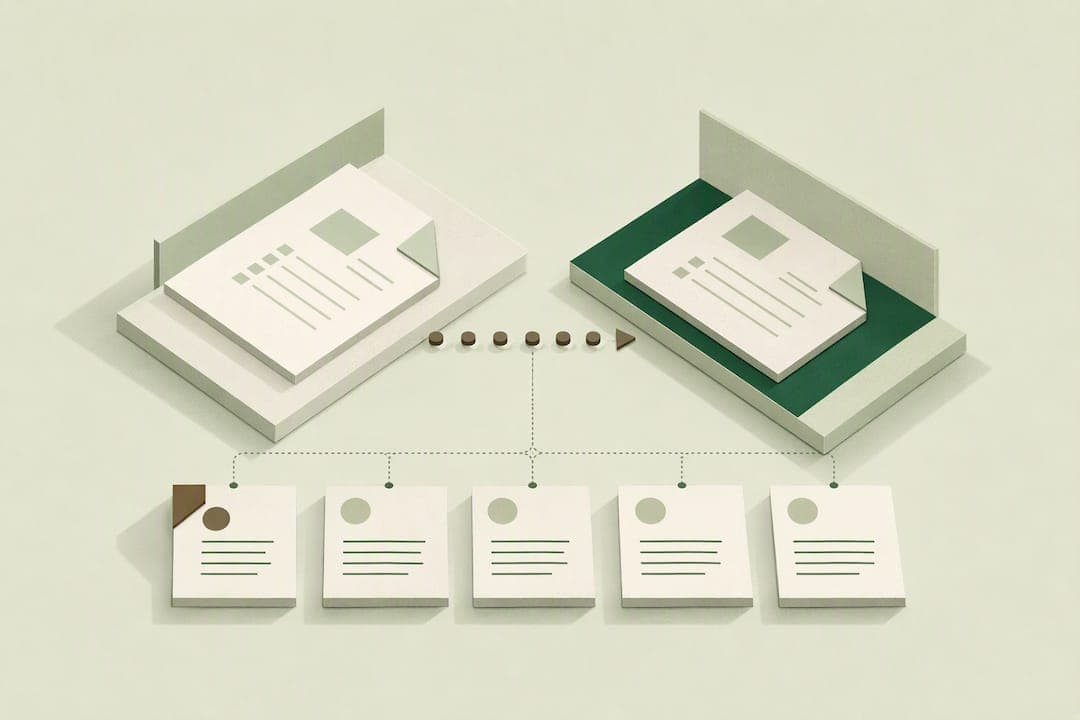
Tender clarification questions are formal written queries a bidder submits to a contracting authority to resolve ambiguity in a tender document before or after submission. The single best practice is simple: raise the question as early as possible, cite the exact document, clause and page number, and submit it through the official portal rather than by email. Every answer gets published to all bidders, so treat clarification as a public, recorded exchange, not a private conversation.
TL;DR:
- Raising clarification questions early ensures access to published answers and prevents last-minute surprises that could affect bid accuracy.
- Clarification questions must precisely cite the document, state the issue factually, provide a brief rationale, and request a specific action to avoid vague responses.
- Questions should only address genuine ambiguities related to price, compliance, or missing data, avoiding inquiries that could imply negotiations or reveal strategies.
- Responding authorities are legally required to answer promptly without altering the scope or terms, and unresolved critical issues close to deadlines can lead to re-issuance of documents.
- Managing all clarifications within a central log with reusable templates and evidence libraries improves accuracy, maintains an audit trail, and optimizes team coordination.
Table of Contents
- What counts as a tender clarification question?
- When should you actually ask a clarification question?
- How do you phrase and format a clarification question?
- How do deadlines, portals and published answers work?
- What must buyers do when they answer, and what are the risks?
- What do good clarification questions look like in practice?
- How do structured workflows keep clarifications accurate and auditable?
- Why treat the clarification window as a strategic asset, not paperwork?
- Manage clarifications without losing track of the audit trail
- Sources
- FAQ
What counts as a tender clarification question?
There are two distinct types, and mixing them up causes problems. A bidder clarification (also called a pre-submission clarification) is a question raised during the tender window, before you submit your bid, to resolve ambiguity in the specification, pricing schedule or contract terms. A post-tender clarification happens after submission, when the buyer needs to understand something in your bid that appears unclear or contains a minor error.
Both types share one hard limit: they cannot change the substance of what's being procured or what's being offered. CPC guidance on tender clarification is explicit that clarifications resolve ambiguity, they do not renegotiate scope, price or terms. If a query would materially alter requirements, the buyer must stop and reissue the affected documents rather than answer it as a simple clarification.
When should you actually ask a clarification question?
Not every doubt deserves a question. Ask when the issue genuinely affects price, compliance, or your ability to submit a complete response.
Raise a clarification when you spot:
- Missing pricing inputs — a schedule references data (volumes, site drawings, historical usage figures) that hasn't been provided
- Contradictory clauses — the specification says one thing in Section 3 and something different in the pricing schedule
- Absent site or technical data — you cannot assess feasibility or compliance without it
- Apparent drafting errors — a clause that seems to reference the wrong document or an outdated standard
Hold back when the answer is already in the document (careful reading first, always), when the question is purely editorial (a typo that doesn't affect meaning), or when answering would reveal your pricing method or delivery approach to competitors. Executive Compass's guidance on submitting clarifications warns that clarifications are not a back door into price negotiation, and buyers will treat any question that reads that way with suspicion. Submit early rather than in a last-minute batch. A question sent three days before the deadline risks an answer that arrives too late to act on.
How do you phrase and format a clarification question?
Every strong clarification question does four things: names the document, states the issue as a fact, gives a one-line reason, and asks for a specific action.
- Cite precisely. Name the document title, clause or section number, and page. "ITT Volume 2, Section 4.3, page 17" leaves no room for confusion.
- State the issue factually. Describe what's missing or contradictory without explaining how you'd solve it. Revealing your methodology or cost assumptions in the question itself hands information to every competitor reading the published log.
- Give a brief rationale. One sentence on why the ambiguity matters is enough. "This affects the resource plan submitted at Section 5" is sufficient.
- Request a specific action. Ask the buyer to confirm, correct, or supply something. Vague questions get vague answers.
Three templates cover most scenarios:
Missing data: "Please could you confirm whether Appendix C (site utilisation data) referenced in ITT Section 6.2 is available, and if so, when it will be published?"
Contradictory clauses: "ITT Section 3.4 (page 12) states a five-year term; the draft contract at Clause 2.1 states seven years. Please could you confirm which term applies?"
Apparent error: "Pricing Schedule Line 14 refers to 'Standard BS 8555' which does not exist. Please could you confirm the correct standard reference?"
Pro Tip: Never bundle a genuine ambiguity question with a fishing question about scoring weightings or evaluator preferences. Buyers spot the difference, and it can flag your bid as one to watch more closely during evaluation.
How do deadlines, portals and published answers work?
Most invitations to tender set a clarification window that closes several days to a fortnight before the submission deadline, stated in the ITT's key dates section. Miss that window and the buyer has no obligation to answer before you need to submit.
Practical points to build into your bid process:
- Check the ITT's key dates page first — the clarification deadline is almost always separate from the submission deadline
- Submit through the named portal, not by email, unless the ITT states otherwise
- Monitor the portal log manually — Procurement Journey's clarification guidance notes that answers are published to all bidders as Q&A entries, and relying only on email alerts risks missing an update
- Assume every answer is visible to competitors — this is precisely why your question should never reveal strategy
What must buyers do when they answer, and what are the risks?
Contracting authorities carry a legal duty to respond without unnecessary delay. Under the Procurement Act 2023 guidance on time periods, avoiding unnecessary delay explicitly includes responding promptly to supplier clarification questions, so a buyer that sits on a critical query for weeks is not following the spirit of the rules.
Answers must not change the substance of the requirement. If a clarification reveals a genuine specification error or ambiguity serious enough to affect competition, the Procurement Act 2023 requires the buyer to stop and republish the affected documents rather than quietly patch the answer into the Q&A log. Every exchange must be recorded in writing to maintain an audit trail and demonstrate equal treatment across bidders. If a critical clarification goes unanswered close to deadline, escalate through the named contact and keep a written record of your attempts. That record matters if you need to challenge the process later.

What do good clarification questions look like in practice?
A handful of anonymised, adapted examples show the pattern:
- Clause conflict: "Contract Clause 9.2 sets a 30-day payment term; ITT Section 2 states 45 days. Please confirm which applies."
- Missing data: "The evaluation criteria reference a weighting matrix not included in the tender pack. Please confirm when this will be published."
- Specification error: "Technical Schedule Item 7 specifies a discontinued product code. Please confirm the current equivalent."
- Ambiguous scope: "Section 4 lists 'ad hoc site visits' without a frequency. Please confirm the expected number per annum for pricing purposes."
A poor example asks: "Can you tell us more about how you'd like us to approach the delivery plan?" That invites the buyer to help you write your own bid, and most will decline to answer. The improved version asks: "Does Section 5.1 require a single delivery lead or does the buyer accept a shared leadership model across partner organisations?" Same underlying doubt, framed as a factual question with a clear yes/no answer.
How do structured workflows keep clarifications accurate and auditable?
A single, centralised clarification log beats scattered emails and personal notes. It keeps every question, answer and reference clause in one place, gives your whole bid team the same visibility, and makes it far easier to keep phrasing consistent across multiple live tenders.
- Centralise the log so nothing gets missed when a deadline moves or an answer lands out of sequence
- Automate the routine parts — portal alerts and deadline reminders — but keep manual oversight on anything touching price or scope
- Reuse evidence libraries and templates to draft precise, non-revealing questions faster, without retyping the same clause-reference format every time
Evidence libraries and requirements-analysis tools can support this kind of workflow by using an organisation's past responses to speed up drafting while keeping a clear record of what was asked and answered.
Why treat the clarification window as a strategic asset, not paperwork?
Bidders who treat clarifications as a box to tick usually miss the point. The window exists to fix pricing risk and specification errors before they cost you the bid, and the questions you ask (or fail to ask) often say as much to the buyer as your written proposal does.
The most common mistake is asking too late or too vaguely to get a useful answer. Start with a quick first-action checklist: read the full document once, flag anything that affects price or compliance, and submit your clearest question first. Structured tools and training can sharpen this further as your pipeline grows.
— Syed
Manage clarifications without losing track of the audit trail
Some platforms provide bid teams with a single workspace for this stage of the process, replacing scattered emails and spreadsheets with a structured log tied to evidence libraries and past submissions. Instead of rebuilding clarification phrasing from scratch on every tender, users can draft against their own historical responses, keep a clean audit trail, and reduce the back-and-forth that eats into deadline time. Approaches that ground AI-assisted drafting in real evidence may help improve win rates by focusing on requirements analysis and reusable case studies rather than generic AI output.

Plans run from a Free tier through to Standard at £29 per month, Pro at £79 per month, and Max at £249 per month, each with different limits on tenders, AI edits and evidence library size. If clarification management and bid drafting are eating more hours than they should, start with the free plan or explore Bidblock's tiers and see which level fits your current pipeline.
Sources
FAQ
What are good questions to ask for clarification in a tender?
Good clarification questions cite the exact document, clause and page, state the ambiguity as a fact, and request a specific action such as confirming a figure or correcting an error. Avoid questions that reveal your pricing approach or delivery methodology, since answers are published to every bidder.
What is tender clarification?
Tender clarification is a formal written exchange between a bidder and a contracting authority to resolve ambiguity in a tender document, either before submission or during evaluation. It cannot change the substance of the requirement; the CPC's guidance confirms that material changes require the competition to be stopped and reissued.
What are the stages of the tendering process?
Public sector tenders typically move through planning, publication, supplier questions and clarifications, submission, evaluation, award, and contract mobilisation. Clarification activity sits mainly in the window between publication and submission, though post-tender clarifications can also occur during evaluation.
What is a tender checklist?
A tender checklist is a working document bid teams use to track submission requirements, accreditation evidence, deadlines and open clarification questions in one place. Tools like Bidblock build this checklist function into a shared workspace, linking it directly to an evidence library so nothing gets missed close to deadline.